





Wednesday brought four separate developments in the race for Indiana Secretary of State. The sitting secretary of state, who is not on the November ballot, answered a Democratic candidate’s television ad. A national handicapper moved the race to toss-up. One candidate rolled out a plan to overhaul how the state trains county clerks, and both of his opponents fired back within hours. All of it lands the day before the Indiana Supreme Court hears a recount appeal from the Senate District 23 primary.
Morales Answers a Bayh Ad
Indiana Secretary of State Diego Morales pushed back Wednesday against a television ad from Democratic Secretary of State candidate Beau Bayh, saying the ad makes misleading accusations about how his office operates.
“There is no corruption to clean up,” the statement said.
The statement went out through Diego for Indiana, Morales’ former campaign committee.
It says that since January 2023 the office’s administrative and financial data, contracts and records have been public, and that revenues and expenses run through the state’s centralized accounting system under the oversight of the state comptroller and the State Board of Accounts. It says the office returns more money to the General Fund than it receives and is largely funded by its own revenues rather than tax dollars, and that all vendors have been contracted through public processes, with contracting opportunities and contracts posted online and reports filed with the State Budget Agency.
Morales also took issue with Bayh’s campaign pledges to lower taxes and focus on environmental causes, saying they reflect a misunderstanding of the office’s authority.
“Before attacking an office he wants to lead, Beau Bayh should understand how that office actually operates,” Morales said. He said repeating accusations he called untrue, misleading and defamatory does not make them true.
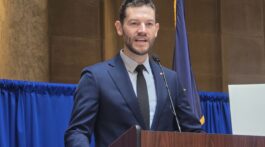
Morales is not on the November ballot. He was denied renomination at this year’s Republican state convention, where delegates picked former congressional aide Max Engling instead.
Crystal Ball Moves Indiana to Toss-Up
Also Wednesday, Sabato’s Crystal Ball moved the Indiana Secretary of State race from Likely Republican to toss-up — one of only two secretary of state races in the country the newsletter puts in that category this year, along with Michigan. Senior columnist Louis Jacobson, who has handicapped these contests for more than a decade, called Indiana potentially the most interesting secretary of state race in the country and wrote that he has “no clue who will win.”
Jacobson tied the shift to the wholesale change in the field. He noted that Morales won the office in 2022 by denying the sitting Republican incumbent renomination at a state convention and then lost it the same way this year, citing controversies over his purchase of a luxury car, his international travel and his hiring of family members. Indiana is one of three states this cycle, with Nebraska and South Dakota, where a sitting secretary of state was denied renomination.
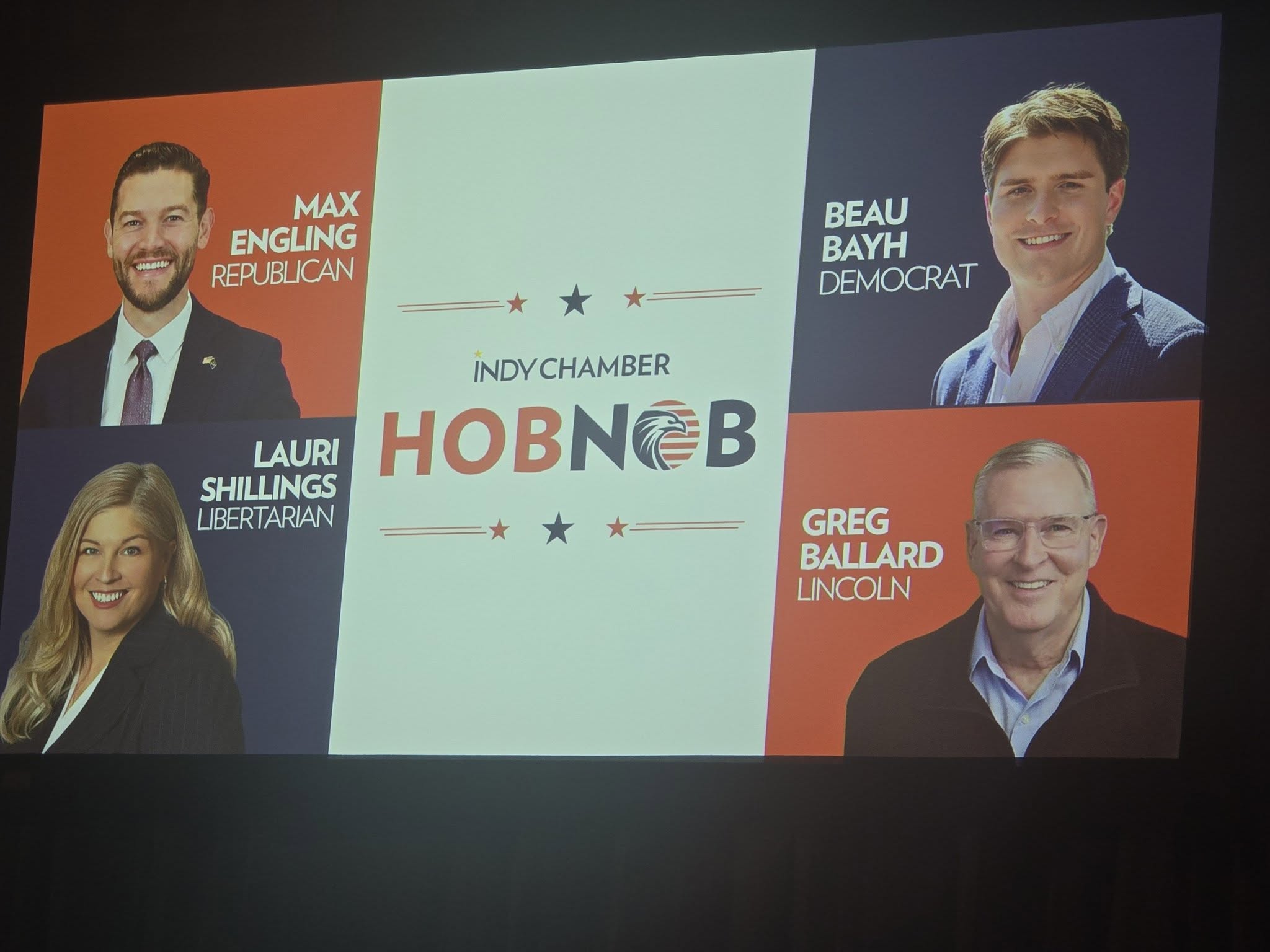
The analysis describes a three-way race and says any of the three could win: Engling, who emerged from a contested convention with the backing of U.S. Sen. Jim Banks, for whom he once worked; Bayh, a Marine veteran, son of former Gov. and Sen. Evan Bayh and grandson of the late Sen. Birch Bayh, who had to hold off a stronger-than-expected convention challenge from his left by Army Reserve veteran Blythe Potter; and Ballard, also a Marine veteran, who played down partisanship as mayor and secured ballot access as an independent. Jacobson wrote that it is unclear whether Ballard draws more votes from Engling or from Bayh, or wins outright, and that with little else competitive on the Indiana ballot this year the race will get the bulk of the attention.
“It’s no surprise to me that the national media is starting to recognize that I can win the race for Secretary of State,” Ballard said in a statement. He said Hoosiers tell him they want someone with a record of independence overseeing the state’s elections.
Ballard Targets Clerk Training
Ballard spent the rest of Wednesday rolling out a plan to change how Indiana trains the people who run its elections. He said he has been meeting with sitting county clerks who told him they learn the job from one another rather than from the state, in some cases traveling to other counties for instruction.
“There is no standard hands-on training for county clerks in Indiana on how to actually do this job,” Ballard said. “Ninety-two counties, 92 different ways of doing business.”
The Indiana Election Division does hold training sessions for clerks, which Ballard’s campaign acknowledges. His argument is that they cover changes in the law since the last legislative session rather than election administration itself.
The plan has three parts: a hands-on training boot camp conducted in a practice version of the statewide voter registration system and taught by current and former clerks; funding standardized training for poll workers and county election officials, which the campaign says state law already authorizes but the legislature has never paid for, along with a state curriculum, train-the-trainer sessions and regional field staff; and a single standard across all 92 counties.
Ballard’s campaign pointed to the Senate District 23 Republican primary recount as evidence of what inconsistent practice costs, saying procedural errors by county officials there led to disqualified ballots and a changed outcome.
Bayh Welcomes It
Bayh’s campaign also weighed in, and struck a friendlier tone than the other two.
“I applaud any effort to address the unmet needs of our hardworking county clerks,” Bayh said. He said that if elected he would work with the bipartisan Election Division and the Association of County Clerks to address training needs in a way that is both efficient and secure.
Engling: Partner, Don’t Mandate
Engling responded Wednesday afternoon, saying the office should work directly with county election officials rather than impose a program on them.
“Greg Ballard seems more focused on press releases than solutions,” Engling said, noting that 92 elected clerks run elections in 92 different counties.
Engling said the Secretary of State should come alongside clerks instead of dictating a one-size-fits-all solution from Indianapolis. His campaign said he has already met with clerks around the state, the Indiana Clerks Association and the Association of Indiana Counties, and has more dates scheduled. His approach, he said, is to listen to the people administering elections, strengthen training, share best practices and make sure clerks have the resources they need.
He also said Ballard has not identified how his program would be paid for or how he would work with the local officials who actually run elections. Clerks deserve a Secretary of State who serves alongside them, Engling said, not someone who “runs to a microphone every time he comes up with another idea.”
Shillings Campaign Says She Got There First
Libertarian candidate Lauri Shillings, who is also on the November ballot and was not mentioned in the Crystal Ball analysis, responded through campaign manager Danny Lundy, who said Shillings has been talking about tools and training for county clerks since she announced in March 2025, and that “better tools and training” was her answer to a question about the recount at the most recent debate.
Lundy said Shillings’ approach starts with modernizing the Secretary of State’s website so voters can see who is funding candidates, then extending that system to the county level so the same information is available for local offices. Making it available to clerks, he said, would supply much of the standardization Ballard is describing.
“We just have a plan for how to achieve that,” Lundy said.
He also drew a line at how far the state should go. County clerks have autonomy for a reason and know how to serve their own communities, Lundy said, and the Secretary of State’s job is to give them the tools and training to do the work rather than to micromanage their methods, while offering best practices and encouraging innovation.
Back to Senate District 23
That case returns Morales to the picture. He chairs the Indiana Recount Commission, which certified challenger Paula Copenhaver over incumbent Sen. Spencer Deery by three votes after rejecting six absentee ballots that county boards had counted but that lacked a circuit court clerk’s endorsement. Morales voted with the majority; Commissioner Claytor dissented.
Deery’s appeal is set for oral argument before the Indiana Supreme Court at 11:15 a.m. Thursday. Deery argues a state savings statute permits counting ballots in a recount when the defect was an election officer’s error. Copenhaver argues he has not proven the missing endorsement was solely the fault of an election officer, and the Recount Commission — represented by the attorney general’s office — argues the voter bears responsibility for making sure a ballot is official.