







by Abdul-Hakim Shabazz, Esq.
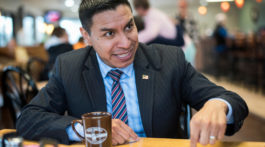
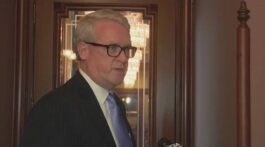
Greg Ballard stood in the Statehouse Tuesday holding a booklet. The state, he said, should mail every registered voter a guide to their own ballot: precinct-specific, with what a county assessor actually does, the two constitutional amendments most Hoosiers will meet cold in the booth, and a sample ballot you can mark at home and carry in.
Cost: $2.5 million to $3 million. Ballard’s framing was a penny for every $100 the state spends.
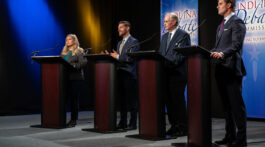
The pushback was fast and bipartisan. Max Engling’s campaign said there is no funding for it and that Ballard wants to grow state government and stick taxpayers with the bill. Beau Bayh’s people said millions to mail a booklet plenty of voters will throw away is money better spent elsewhere; at Wednesday’s HobNob debate, Bayh pegged it at a quarter of the Election Division’s budget. Lauri Shillings noted, fairly, that IndianaVoters.IN.gov already hosts most of the information.
All right. Let’s talk about whose money gets spent on elections here.
Indiana taxpayers paid $13.3 million to run the 2024 primaries and $8.7 million to run the 2023 primaries, according to the secretary of state’s own office. That is public money underwriting the internal nominating business of two private organizations, and it is not as though the doors are open. Under state law, if you want your name on a party’s primary ballot, you must have voted in that party’s last two primaries or get a county chairman to vouch for you. You pay for the election. A party official decides who is allowed to be in it.
Then comes June. The delegates who retired Diego Morales and made Engling the nominee were themselves elected in May, on ballots the counties printed and taxpayers financed. The parties pay for the hall and the box lunches. We pay to elect the people who fill the seats.
So if the objection is a principle, that taxpayers shouldn’t fund what ought to be a private expense, wonderful. There is $13 million a cycle. Let the Republicans and Democrats pay to run their own primaries and pay full freight on their conventions, delegate selection included. You could fund Ballard’s guide four times over and still hand money back. Ballard made that trade himself Wednesday night.
Now, about this newfound thrift.
For the last four years, that office was run by a man who bought a $90,000 GMC Yukon Denali with public money from a dealership that had given his campaign tens of thousands. He handed out no-bid contracts, put his brother-in-law on the payroll, dispensed spot bonuses outside regular payroll, and spent ten days in India without telling anyone, missing a budget hearing. It took a bipartisan bill, House Bill 1518, to make it harder for state officials to buy luxury cars with your money. Sen. Chris Garten was one of the few Republicans to say it out loud: the vehicle cost nearly twice the average Hoosier’s salary.
From most of my Republican friends on the fiscal restraint beat, crickets.
Then came February, when we reported that the employees in that office authenticating candidate declarations may not have been certified as special deputies, meaning those filings could be challenged and candidates knocked off the ballot. Candidates in both parties refiled out of caution; state Rep. Bob Heaton stood in the Election Division redoing paperwork for a ninth term. Morales called the reporting false, uninformed and irresponsible, then sent over his office’s special deputy paperwork. The last certificates on file were Holli Sullivan’s.
Nobody withdrew an endorsement over that either.
What finally moved them was a noncitizen. A former chief of staff, legally in the country and authorized to work, had registered to vote in Tippecanoe County years ago; records indicate she never cast a ballot and canceled in 2013. Within days, Jim Banks pulled his endorsement and recruited a replacement. Rokita pulled his. Daniel Elliott called for a resignation. Delegates dropped Morales to third.
A $90,000 SUV, fine. Filing paperwork that could have cleared half the ballot, fine. A canceled voter registration from the Obama years, emergency.
And now the fight is over transgender athletes, in a race for an office with no jurisdiction over transgender athletes, because Ballard said in 2022 that Holcomb’s veto should stand. Ballard calls it a purity test. Bayh calls it a nonissue. Both are right. The secretary of state has roughly as much authority over who runs the 400 meters as Dr. Frank-N-Furter had over the IHSAA, and Frank at least needed a whole laboratory and seven days to build his creature. Engling’s people assembled this one out of a four-year-old sports bill in an afternoon.
Nobody burns August relitigating a 2022 sports bill because they have nothing better to do. Someone must have seen internal polling that bodes well for Ballard. Campaigns do not spend money attacking a man they expect to finish fourth. They ignore him. And if I’m wrong about that, there is an easy way to prove it. Open the kimono. Show me the crosstabs. They all have my cell number.
Some folks are worried about the Lincoln Party guy.
I don’t part company with Ballard on this, exactly. But an election you pay for is an election you own. The more of the tab the parties pick up, the more they get to control the process and who gets to play: close the primary entirely, or skip the voting and settle it in a ballroom. In a state where most legislative seats are decided in May, that is the last leverage an ordinary voter has. None of this is Ballard’s to fund anyway. The General Assembly appropriates, and it is run by the two parties he would be billing.
But “we can’t afford it” was never the argument. The argument is that the money is better spent on what they already decided to spend it on. Which is their primary.
Abdul-Hakim Shabazz is the editor and publisher of IndyPolitics.org and an attorney licensed in Indiana and Illinois. He has known Greg Ballard for 20 years and ran in one of those taxpayer-funded primaries himself in 2023.