






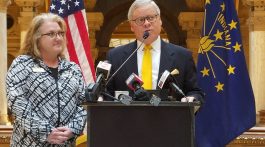




Indiana’s state treasurer’s race rarely commands the spotlight, but Democratic candidate Coumba Kebe says voters should pay attention to the office that manages and invests billions of public dollars. In an interview with Indy Politics, Kebe argued that the treasurer can help make government more transparent and press lawmakers to consider the financial and economic consequences of policy choices. She is challenging Republican incumbent Dan Elliott for the statewide position.
Kebe’s path to the campaign began in the Medicaid field, where she spent a decade working on operations and budgets. She earned a master’s degree in public health from Indiana University and has lived in Indiana since she was 11. She said she had not expected to become a politician. Her decision to run followed advocacy against Medicaid cuts: after she and other advocates raised concerns, she felt their voices were disregarded.
That experience, she said, changed her view of public service. “If they won’t do their jobs, I’ll step up and do it for them,” she recalled thinking. Kebe described the treasurer’s office as a place from which she could encourage accountability and help residents understand how public money is managed.
Her central message is that strong reserves and investment returns should not be celebrated without asking how they were built and whether people are benefiting. Kebe said reserves matter, but questioned whether savings achieved through cuts to essential services come at too high a cost. She pointed to Medicaid reductions as an example of decisions that, in her view, can affect families, workers and communities.
Kebe also drew a distinction between advocating on budget policy and controlling the state budget. The treasurer does not decide how reserve funds are allocated, she said; that authority rests with the legislature. Rather than promise to spend the reserves, she said she would urge lawmakers to make better budget decisions and weigh the long-term effects of their policies.
She cited the Indiana Bond Bank as one tool available to the treasurer’s office, saying it can offer local governments low-interest loans. Kebe also discussed the possibility of roughly $1.2 billion in savings if the state pays off its remaining bond debt. She said those savings should prompt lawmakers to consider investments in communities, local government, rural hospitals, childcare and other needs. She did not propose a specific allocation, emphasizing that the decision belongs to the legislature.
On investment management, Kebe said she would work with the office’s team to assess whether investments are sound and maximize returns for Hoosiers. She questioned whether reported gains reflect investment decisions or favorable economic conditions, including high interest rates. She said she wants the office’s financial expertise and resources to benefit local communities.
Kebe said her campaign has raised $374,000 from more than 530 individual contributors. She also explained that its television advertising is intended to raise awareness of a down-ballot office she believes receives too little public attention. She criticized Elliott for not posting annual reports on the treasurer’s public webpage, arguing that greater attention helps voters hold officeholders accountable.
Assessing the election season, Kebe called it “odd” and criticized what she characterized as political maneuvering among Republicans. She said voters should consider the value of balance in government, regardless of which party holds power. Her case to voters is rooted in her experience managing budgets and her belief that financial decisions have human consequences: behind each figure, she said, are people, families and communities.
Kebe’s proposed role is therefore less about personally directing state spending than using the treasurer’s platform to improve transparency, inform debate and advocate for decisions that account for Hoosiers’ needs and Indiana’s long-term financial future.