

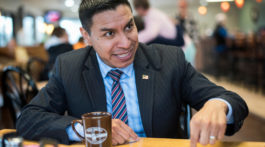

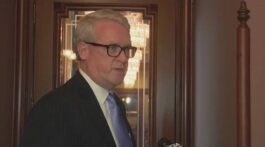





The Indiana Secretary of State’s Office used its official state website to respond to a campaign ad from Democratic Secretary of State candidate Beau Bayh. The release calls Bayh’s accusations of corruption “untrue, misleading, defamatory.”
The release is dated Sept. 9 and is posted on the office’s government website. It is titled “Indiana Secretary of State Diego Morales Sets the Record Straight Following Attacks on Office Administration.” It says Bayh’s latest political advertisement “makes misleading accusations about his office’s operations.”
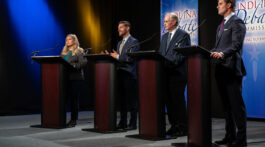
Morales is not on the November ballot. The four candidates seeking the office are Bayh; Republican Max Engling; Lincoln Party candidate Greg Ballard, a former Indianapolis mayor; and Libertarian Lauri Shillings.
“Clearly Beau Bayh is in hot pursuit of his political ambitions, but when his attacks misrepresent the work of the Office of the Indiana Secretary of State, it is important that the political nonsense be set aside and the record set straight,” Morales said in the release.
The release responds to three themes from Bayh’s campaign: corruption, taxes and no-bid contracts.
On corruption, the release says the office’s administrative and financial data, contracts and records have been public since January 2023. It also says all revenues and expenses are handled through the state’s centralized accounting system, which is overseen by the state Comptroller and the State Board of Accounts. “There is no corruption to clean up,” the release states.
On taxes, the release says Bayh’s pledges to lower taxes and focus on environmental causes “demonstrate a misunderstanding of the responsibilities and authority of the office.” It states the office brings more money into the state General Fund than it receives and is funded largely by office revenues rather than taxes.
On contracts, the release says all office vendors were contracted “through public processes.” It also says the office publishes contracting opportunities and contracts on its website and files periodic reports with the State Budget Agency. The release does not say whether any of those contracts were awarded without competitive bidding.
“Before attacking an office, he wants to lead, Beau Bayh should understand how that office actually operates,” Morales said. “Throwing around words like ‘corruption’ may entertain his base, but repeatedly publicizing untrue, misleading, defamatory, accusations does not make them true.”
Morales also defended his staff, saying the office has stayed under budget despite increased statutory requirements and workload. “We will not allow political noise to distract from that work, but we also will not sit quietly while someone attacks the integrity of the hardworking employees of this office with misleading claims,” he said.
Indiana law restricts how state resources may be used. IC 4-2-6-17 prohibits state officers and employees from using state materials, funds, property, personnel, facilities or equipment for anything other than official state business, unless an approved policy allows it. A separate statute, IC 4-2-7-5, addresses the use of state property for political purposes.
In a 2013 report involving former Superintendent of Public Instruction Tony Bennett, the Indiana Office of Inspector General found that elected state officers are subject to the use-of-state-property rule even though the state’s political activity rule does not apply to them.
Early voting in Indiana is underway, and the general election is Nov. 3.